
Tired Of Temporary Fixes For Your Back Pain?
Painkillers, quick massages, and rest may help temporarily, but they rarely solve the root cause. Discover what's really driving your pain and get a personalised treatment plan designed for lasting results.

Only £75

Hands on treatment

60 minute assessment
Accredited by


A word from
Ross Cairns
Senior Physiotherapist
"If you have lower back pain, physiotherapy usually focuses on reducing pain, restoring movement, and strengthening the muscles that support your spine. Good news: Most cases of lower back pain improve within 4–6 weeks with proper physiotherapy and exercise."

Ready to finally get rid of that back pain?


Why Back Pain Can Be So Difficult To Shake
Your spine is involved in almost every movement you make. When the muscles, joints, discs, or nerves aren't working properly, even simple tasks like sitting, walking, exercising, or sleeping can become uncomfortable.
Many episodes of back pain improve with the right combination of movement, treatment, and rehabilitation.
Common back injuries we help with
Lower Back Pain
Sciatica
Disc-Related Pain
Facet Joint Pain
Muscle Strains & Sprains
Stiffness & Reduced Mobility
Why choose Newcastle Physio Solutions
Expert Physiotherapists.
60 minute one-to-one assessment.
Hands on treatment during each appointment.
Clear diagnosis and explination.
Personalised recovery and Prevention plan.
Only £75
Hands on treatment
60 minute assessment

Frequently asked Questions
How do I know if physiotherapy can help my back pain?
Physiotherapy can help with many common causes of back pain, including muscle strains, joint stiffness, disc-related pain, sciatica, and recurring back problems. During your assessment, we'll identify what's contributing to your symptoms and explain the best treatment options available.
Do I need a referral from my GP?
No. You can book directly with a physiotherapist without seeing your GP first.
What happens during my first appointment?
Your physiotherapist will discuss your symptoms, medical history, lifestyle, and goals. They'll then perform a physical assessment to understand what's causing your pain before creating a personalised treatment plan.
Can physiotherapy help if I've had back pain for months or years?
Yes. Even long-standing back pain can often be improved with the right combination of treatment, exercise, education, and movement strategies. Many people are surprised by how much progress they can still make.
Do you provide hands-on treatment?
Yes. Depending on your condition, treatment may include sports massage, joint mobilisation, manipulation, acupuncture, cupping, taping, and other techniques alongside exercise rehabilitation.
How many sessions will I need?
This depends on the cause of your pain, how long you've had it, and your goals. Some people notice improvement within a few sessions, while others benefit from a longer rehabilitation programme. Your physiotherapist will discuss this after your assessment.
Should I rest if my back hurts?
Not usually. While short periods of rest may help during severe flare-ups, staying active and moving appropriately is often one of the most effective ways to support recovery.
Can physiotherapy help with sciatica?
Yes. Physiotherapy is commonly used to help manage sciatica by addressing the factors contributing to nerve irritation, reducing pain, and improving movement and function.
What if I'm not sure physiotherapy is right for me?
That's exactly why we offer a free 15-minute telephone consultation. You can speak to one of our physiotherapists, discuss your symptoms, and find out whether physiotherapy is likely to help before committing to an appointment.
Ready to fix your back pain?
At Newcastle Physio Solutions we focus on identifying the root cause of back pain and fixing it properly, not just short-term symptom relief.
Want to learn more about your back pain?
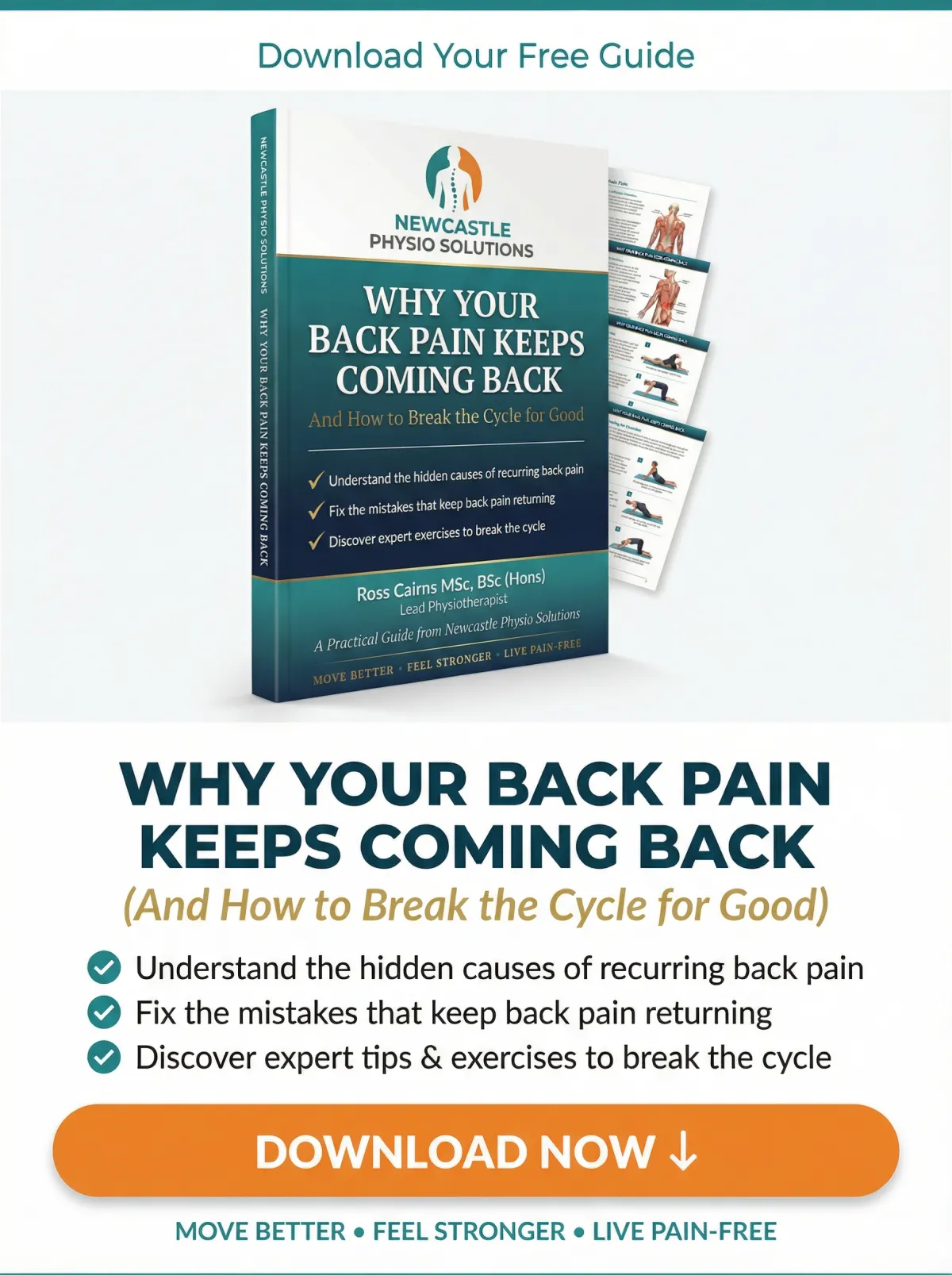
Ready to talk to a Physio? Click this button!
Want to go straight to treatment? Book an initial assessment today!
Newcastle Physio Solutions
A Health Care Revival Solutions Limited Company
1 Station Road
Newburn
Newcastle Upon Tyne
NE15 8LS


